


August 6, 2026

33

30 mins 24 seconds
Inside the CFO–Sales Partnership: How Real-Time Data Changes the Game, with Christina Liu
Listen on


Play Video

Most CFOs know what the sales team closed. Far fewer have a reliable view of what is happening inside the pipeline before those deals reach the finish line.
Which opportunities are genuinely progressing? Where is momentum slowing? What is the customer actually saying? And can finance act on that information while there is still time to influence the result?
For Christina Liu, CFO of Sigma Computing, a stronger finance–sales partnership starts with shared, real-time data.
It gives both teams a common view of the pipeline, reduces the need for repetitive deal-review meetings and allows finance to become involved before a commercial decision is finalized.
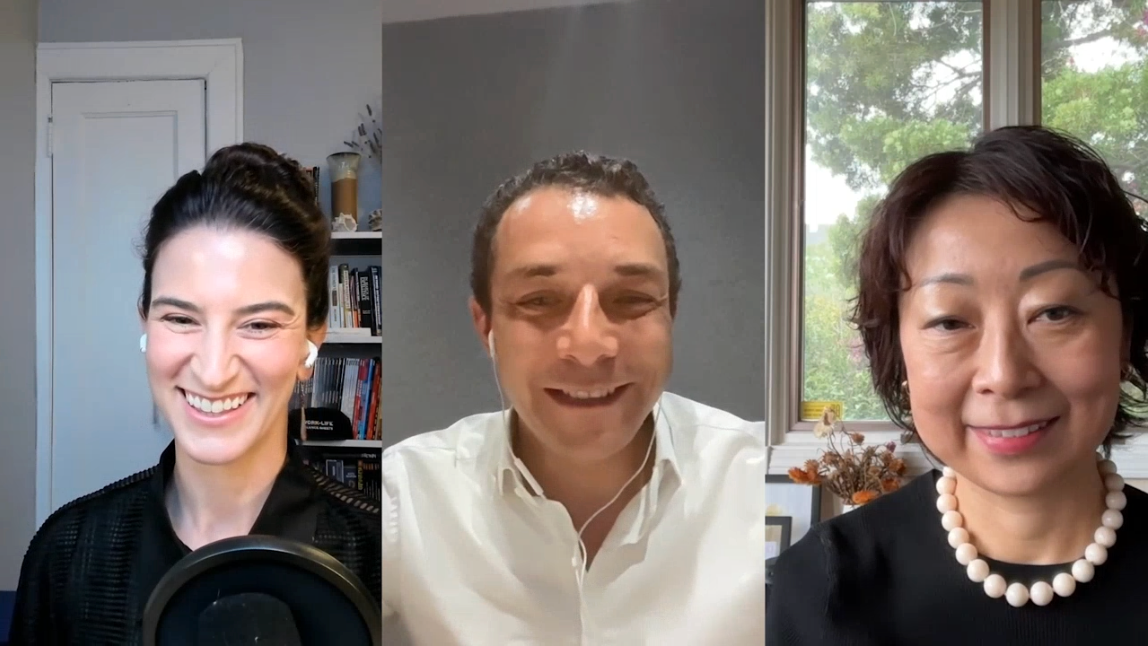
In this episode of The Growth-Minded CFO, Christina explains how curiosity brought her closer to sales, why transparency drives accountability and where AI can - and cannot - support the CFO’s judgement.
Curiosity brings finance closer to the pipeline
Christina’s path to the CFO role began with an unconventional career change.
She initially moved to the United States to study chemistry and pursue a PhD. Within her first year, she switched to accounting, beginning a career that would take her through public accounting, controllership, Chief Accounting Officer roles and two IPOs.
“Always take a risk on yourself, and let curiosity lead the way,” she says.
Curiosity proved particularly important when Christina began reviewing sales contracts as a director of revenue. Rather than treating unusual terms as problems created by the sales team, she began asking what had happened during the negotiation.
What did the customer want? Why had the sales team agreed to a particular structure? What commercial problem were they trying to solve?
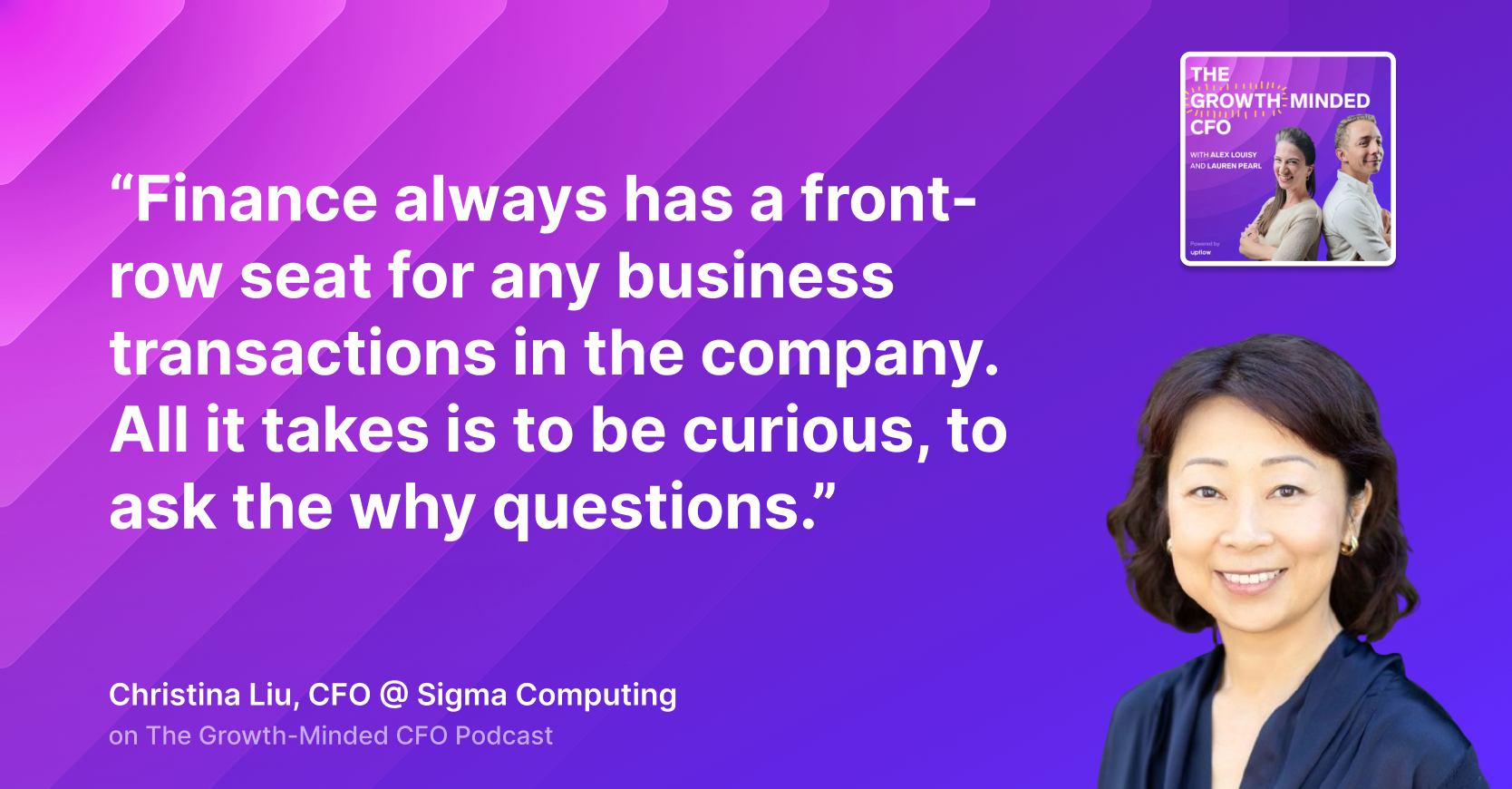
“Finance always has a front-row seat for any business transactions in the company,” Christina says. “All it takes is to be curious, to ask the why questions.”
Those questions helped her move beyond accounting for sales decisions after the fact. They gave her a deeper understanding of the company’s customers, product and market—and created the foundation for a more collaborative relationship with sales.
Real-time data creates a common language
Finance and sales can easily appear to have competing priorities.
Sales wants to maintain momentum and close the deal. Finance wants reliable forecasts, sensible economics and appropriate controls. When the two functions are working from different information, much of their interaction becomes an attempt to establish what is actually happening.
Christina believes shared data can remove that barrier.
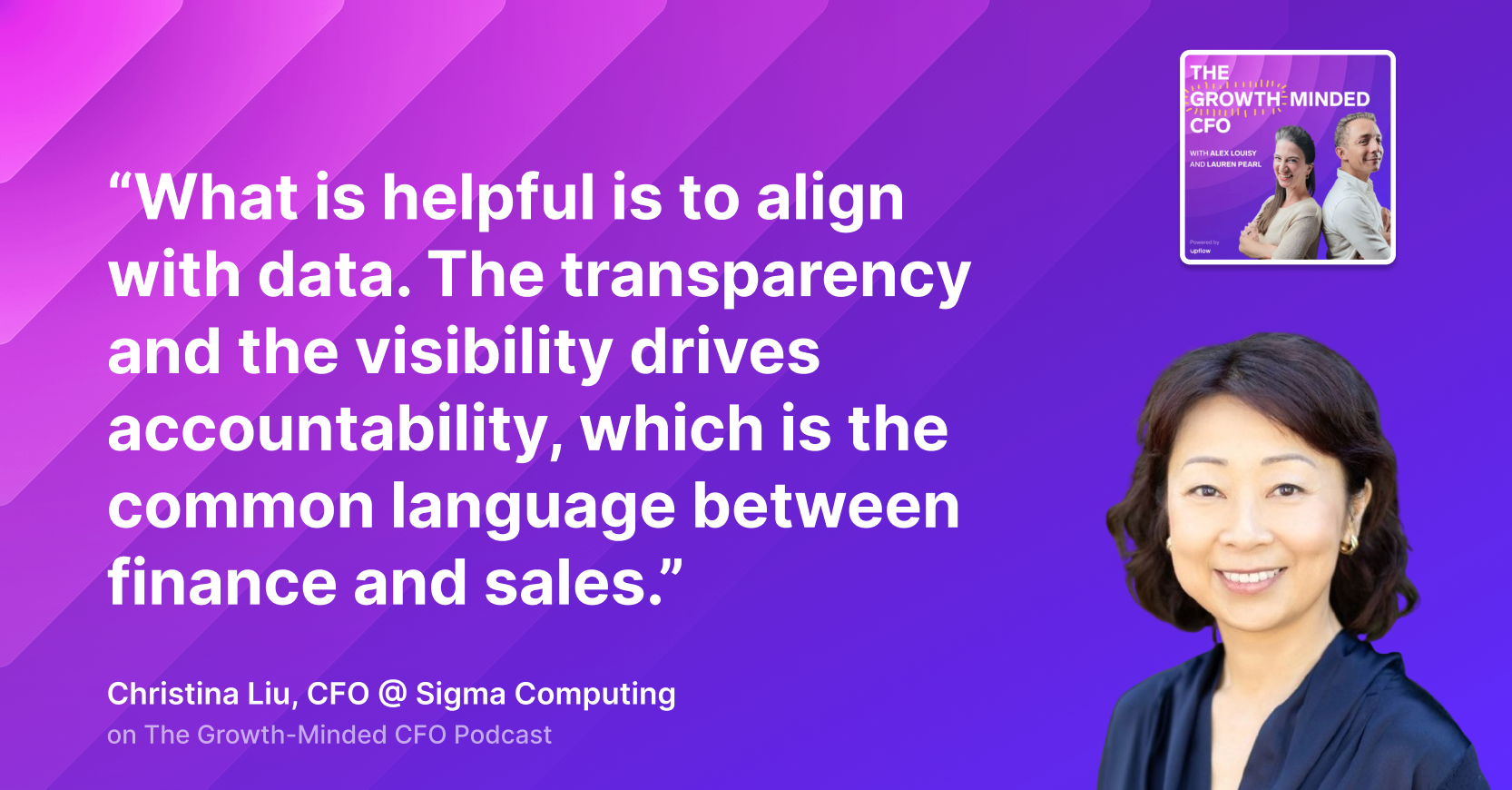
“What is helpful is to align with data,” she says. “The transparency and the visibility drives accountability, which is the common language between finance and sales.”
In previous companies, the end of a quarter often involved daily - or even multiple daily - calls between sales, finance, legal, sales operations, marketing and senior executives.
Those meetings were intended to help deals cross the finish line. But they also required large groups of people to repeatedly assemble, communicate and validate information.
At Sigma, teams can instead access real-time updates on individual deals.
“We have the data right in front of us,” Christina says. “Those calls are not needed because everyone can have access to real-time updates on where we are for each one of our deals before quarter-end.”
The benefit goes beyond fewer meetings. Finance can identify commercial risks earlier. Sales leaders can see where opportunities have stalled. Legal and other supporting teams can intervene before an issue becomes urgent.
Instead of spending time reconstructing what has happened, the business can focus on what needs to happen next.
Finance should help sales find a responsible “yes”
Better pipeline visibility should not become an excuse for finance to add more restrictions to every deal.
Christina doesn’t see finance’s role as automatically saying no to commercial requests.
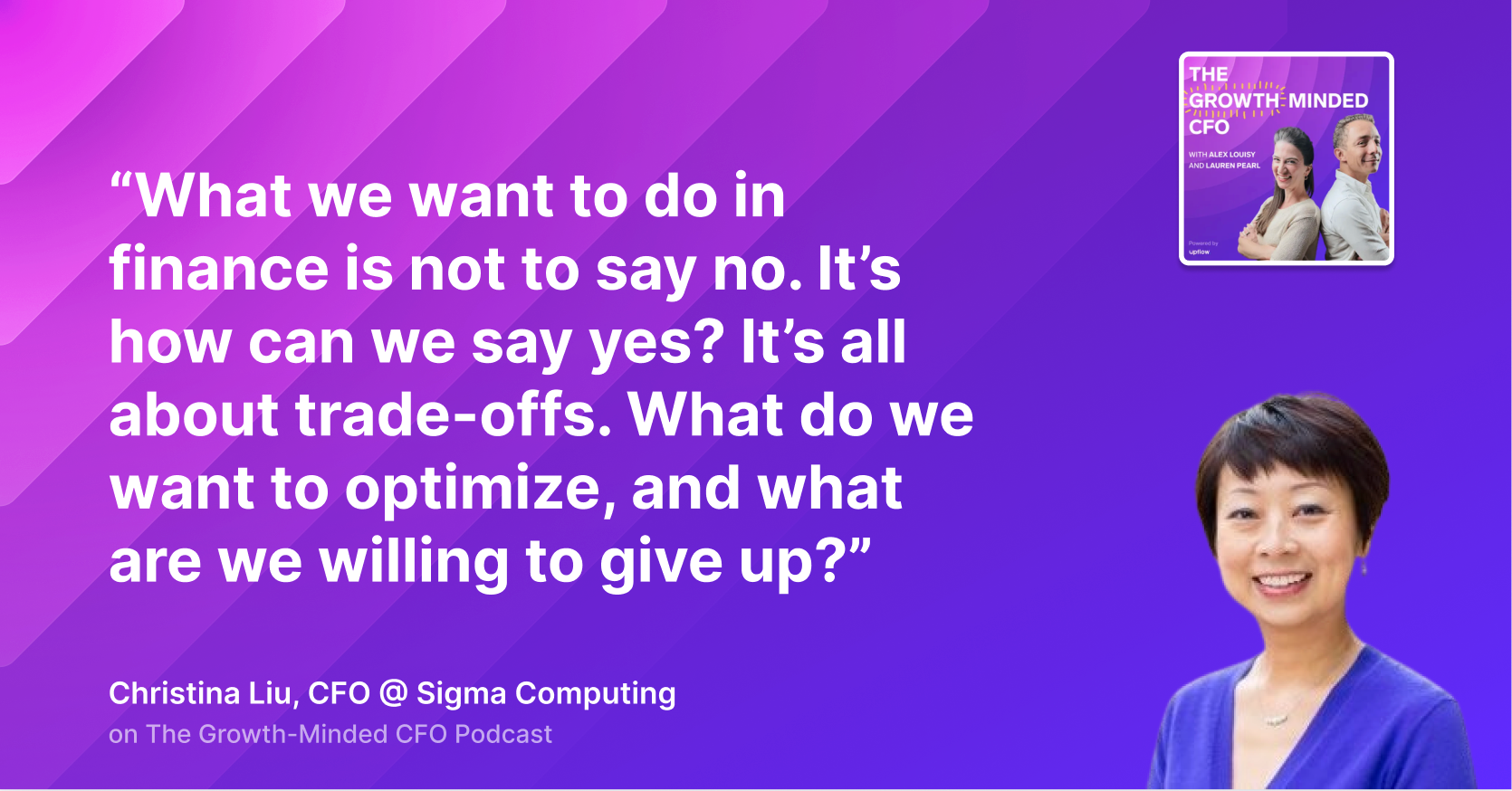
“What we want to do in finance is not to say no,” she says. “It’s how can we say yes? It’s all about trade-offs. What do we want to optimize, and what are we willing to give up?”
A customer request may create additional cost, complexity or risk. Finance’s responsibility is to make those consequences visible and help the company decide whether the opportunity is worth the trade-off.
Christina compares the process to laying out a table.
“You lay everything out on the table so that people can see, ‘If I take this, then I don’t take that,’” she explains. “It’s all about prioritization decisions and trade-offs.”
This changes finance’s position in the sales process - rather than appearing at the end of a negotiation to block an agreement, finance can help shape a commercially responsible route forward. It can clarify which terms matter, which risks are acceptable and what the company is ultimately trying to optimize.
The goal is not to remove tension between finance and sales but to make that tension productive.
AI can answer “what”—but not always “why”
A CRM record rarely tells the full story of a deal. Important context may sit inside sales-call recordings, representative notes, customer history or product-usage data from a proof of value. AI makes it easier to process those unstructured sources and connect them to the formal pipeline.
It can assess sentiment in customer conversations, identify how a deal appears to be evolving and compare those signals with the information recorded in Salesforce.
But Christina draws a clear line between accessing information and exercising judgement.
“With AI, we can do a lot more on the ‘what’ type of questions,” she says.
What were sales in each region? Which team performed best? Where did results differ from the budget?
Those questions are becoming easier to answer. The next layer is more difficult.
“Where I see potential, but we’re not there yet, for AI-assisted analysis is on the why,” Christina says. “In order to answer the why questions, we need context.”
That context might include changes in the wider market, customer priorities, product limitations, competitive dynamics or the specific history of a deal. Even after the CFO understands why something happened, another question remains: now what?
“Now I know the insight - what do I do with it? What do I not do with it? What risks are worth taking, at what cost? I think those are uniquely human decisions.”
AI can improve the speed and quality of the information available to finance and sales. It cannot relieve leaders of responsibility for the final decision.
Real-time visibility helps finance preserve speed
As companies grow, finance is expected to add structure through planning, forecasting, controls and reporting.
But Christina warns that too much structure can slow down a business unnecessarily.
“One common tension or trade-off decision you always have to make is between speed and structure,” she says.
Real-time data gives CFOs another option. Rather than creating a new meeting, report or approval process every time greater oversight is needed, finance can establish visibility without forcing the business to stop moving.
That balance is central to the modern CFO–sales partnership.
The CFO does not need to become a salesperson. But they do need to understand how commercial decisions are being made, what is happening inside the pipeline and where finance can help the business move forward.
Technology makes that visibility possible but the underlying strength of the partnership determines what the company does with it.
Full Episode
If you’re a CFO or finance leader looking to build a stronger partnership with sales, this conversation offers a practical look at what changes when both teams work from the same real-time data. From replacing repetitive quarter-end deal calls with shared visibility to using AI to surface better insights, Christina’s experience at Sigma Computing is a useful reminder that finance adds the most value when it stays close to the pipeline, makes trade-offs clear and helps the business decide not just what happened, but what to do next.
Guest Appearance

Christina Liu
CFO at Sigma Computing
.svg)
About
Christina Liu
Christina Liu joins The Growth-Minded CFO podcast to share how real-time data can strengthen the relationship between finance and sales, improve forecasting and help teams make faster, better-informed decisions.

Available on

We Are On Social
%201.svg)


*based on our Listen Notes rating
**according to Datarails
© 2026 Growth Minded CFO