


July 8, 2026

32

46 mins 52 seconds
From GE’s $100B Transformation to Klarna and DeepL: What Martino Cadoni Has Learned About Scaling
Listen on


Play Video

Martino Cadoni has been part of some high-stakes moments in his finance career so far. At GE Capital, he helped separate a portfolio with more than $100 billion in assets. At Klarna, he worked across fundraising, IPO readiness and M&A. And today, he is CFO of DeepL.
Across those roles, he has seen what changes when companies scale, what makes a business genuinely ready for the public markets, and why CFOs need to keep pushing beyond the traditional boundaries of finance.
At some point, somebody has to build the controls
The mindset that helps a company grow quickly can become harder to manage as the business gets bigger. Teams are used to moving fast and building. Then finance starts introducing more process, clearer ownership and stronger controls.
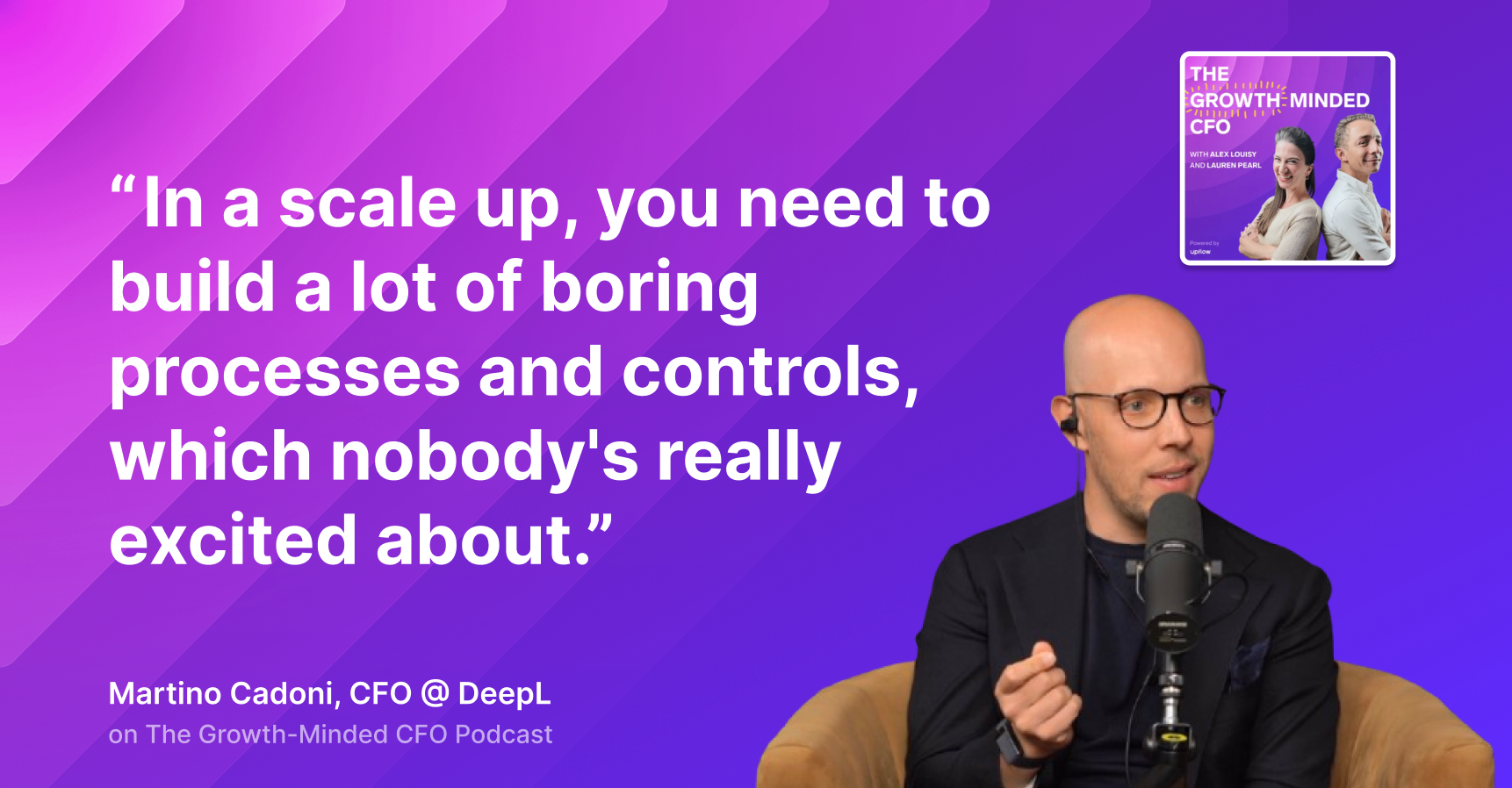
“In a scale-up, you need to build a lot of boring processes and controls, which nobody's really excited about,” Martino says.
Martino saw very different cultures at GE and Klarna. GE had a strong leadership and people development culture, while Klarna was highly disruptive and fast-moving. “If you combine the best of all these cultures, I think you get what it takes to succeed in the medium and long term.”
The challenge for finance leaders is helping the business mature without killing the mindset that created its early success. As Martino puts it: “If you just tell them, ‘Go and do the boring stuff,’ then it's gonna be a very hard journey.”
At Klarna, one way of managing change was to borrow Amazon's habit of describing success first and working backwards. “We always wrote press releases on what success looks like. Like, if we succeed, what would the news and the papers tell about us? And then work backwards. How do we get there?”
Once the destination is clear, it becomes easier to see which skills, teams and processes need to catch up.
What actually makes a company IPO ready?
Martino's first serious exposure to IPOs came at GE Capital. After GE decided to focus on its industrial businesses, he was selected to join the finance and M&A teams separating a portfolio with more than $100 billion in assets.
Some businesses went to strategic buyers and others were sold to private equity. Three major IPOs also came out of the process, and Martino led the finance work for Moneta Bank's $1.5 billion IPO in Prague.
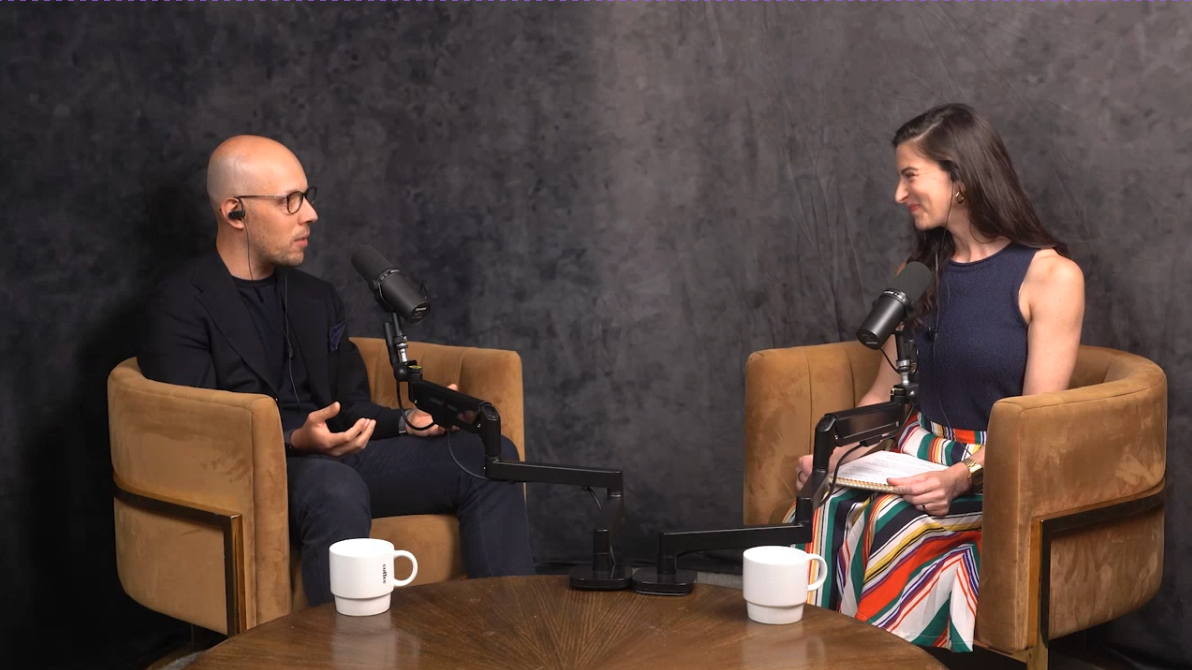
The experience shaped the question he asks when thinking about a company's future: “If you look forward five years, 10 years, 20 years, where is the owner or the space where that business can have the most value?”
An IPO is one answer, but Martino does not see it as the default destination for every successful scale-up. For public markets, he starts with whether investors can understand the product and believe the business will remain defensible over the long term.
“It's not where you are today, but it's also giving the confidence that in five years, 10 years, you're gonna be there, and you're gonna be at your best.”
For the CFO, IPO readiness means being willing to look at the company as an investor would and spot the gaps before the market does.
Whatever the path, finance has to deliver predictability
IPOs, strategic acquisitions and private equity transactions can look very different. Martino sees one common requirement across all of them: “What's very common across all this path is predictability.”
Finance needs to be able to explain the business model, the plan and the assumptions behind the forecast. “You stress test the plan. You are able to work through downside scenarios, upside scenarios.”
That matters because an ambitious company story only goes so far. Investors and buyers need to understand how the company gets from today's position to the outcome leadership is selling.
Martino believes finance should be involved in that process early. “The disconnect often starts from a CFO fault,” he says. If the CFO enters the conversation only when the company is preparing to face investors, they may be left trying to validate a story that has already been built.
Instead, Martino argues that CFOs should be “always next to the founders” and challenge the CEO throughout the journey.
Predictability does not mean pretending a five-year forecast will be perfectly accurate. It means knowing which assumptions drive the plan, how the business behaves when they change, and being able to explain that clearly.
The CFO needs to be nosy
Martino traces much of his operating style back to his early career at GE, where audit work encouraged people to get into the details.
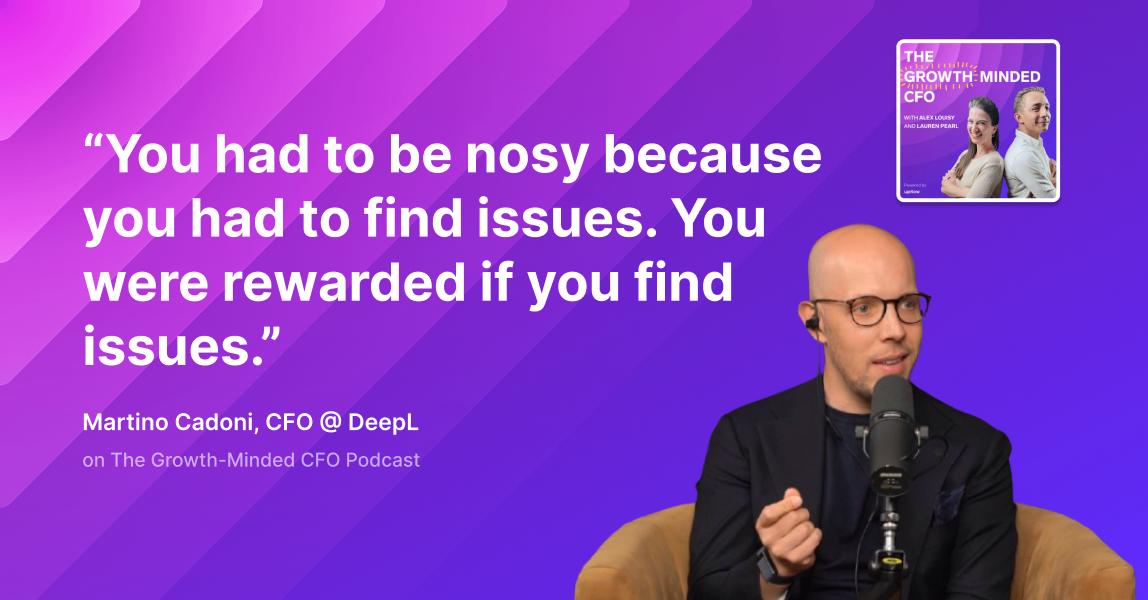
“You had to be nosy because you had to find issues. You were rewarded if you find issues.”
He has carried that mindset into the CFO role. Finance leaders, he argues, need to understand customer negotiations, partnerships, product decisions and what is happening across the wider company.
“The CFO of today, CFO of the future, is much more than finance, and he really truly needs to understand everything that is going on in the business.”
Martino jokes that his role is not completely different from DeepL's chief revenue officer. “He's selling the product. I'm always selling, in a way, the story of the company to the investors, to the media.”
Both roles also require constant negotiation. For Martino, the CFO's financial perspective becomes more useful when it is backed by a detailed understanding of how the company actually operates.
“Only when you are involved at the level of detail, you're gonna really be able to add value in crafting the story and link the dots, like, end to end.”
It is why he describes himself as a CFO “with the mindset of more like CEO or general manager”.
CFO education should make you a better business partner
Martino has continued studying throughout his career, including programmes at Oxford, London Business School and MIT. His approach to education is practical: learn more about the areas where deeper knowledge will make you more useful to the business.
When he studied AI at MIT, Martino wanted to better understand the technical side of the industry and become a stronger partner to CTOs and research leaders.
That knowledge now matters at DeepL when decisions involve choosing between technical investments and understanding the impact on the product roadmap and financial plan.
“Hopefully this helping me today when, you know, I need to make important decisions together with our CTO or chief research on should we invest in A rather than B, what does it mean for our product roadmap, for our financials.”
The lesson for other CFOs is to look at the leaders they need to challenge and ask where their own knowledge is too shallow. In AI, that might mean technology and compute. In another business, it could be product, sales, regulation or supply chain.
For Martino, learning is valuable when it improves the conversations a CFO can have and the decisions they can help make.
After GE, Klarna and now DeepL, his view of the role is clear: get close to the business, understand where it can create the most value, and keep developing the knowledge needed to help it get there.
Full Episode
If you’re a CFO or finance leader working through the shift from fast growth to a more mature business, this conversation offers a practical look at what changes along the way. From building the controls nobody is excited about to preparing a company for public market scrutiny, Martino’s experience at GE, Klarna and DeepL is a useful reminder that finance has to stay close to the business, ask the hard questions early and build a plan people can believe.
Guest Appearance

Martino Cadoni
CFO at DeepL
.svg)
About
Martino Cadoni
Martino Cadoni joins The Growth-Minded CFO podcast to share what GE, Klarna and DeepL taught him about scaling companies, IPO readiness and the changing role of the CFO.

Available on

We Are On Social
%201.svg)


*based on our Listen Notes rating
**according to Datarails
© 2026 Growth Minded CFO